Platform of Platforms Orchestrates Many Platforms Instead of One
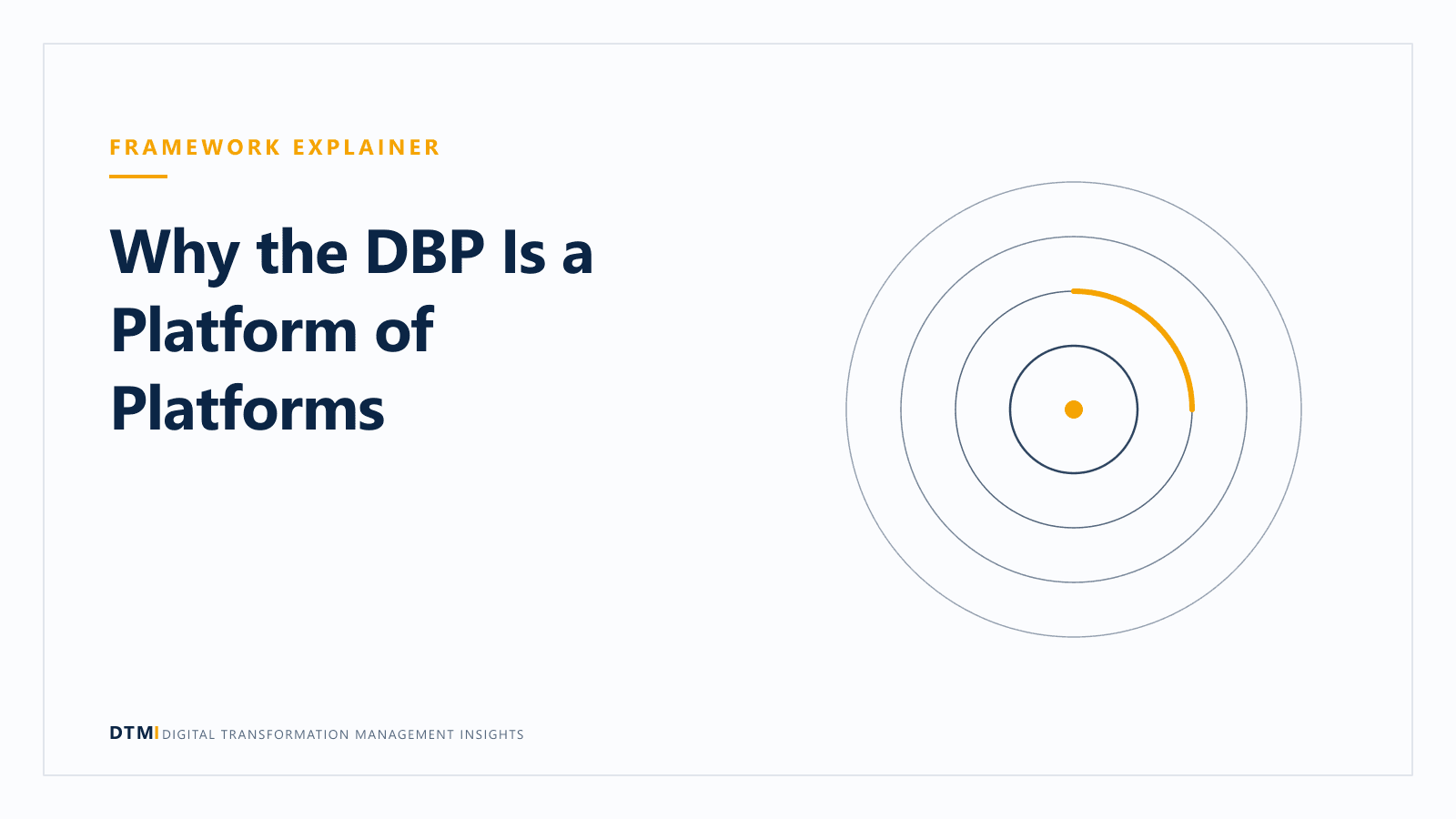
Platform of Platforms describes an architectural pattern in which an enterprise does not operate a single unified digital platform but instead orchestrates multiple specialist platforms, each optimized for a specific domain or function, through a common integration and governance layer. The enterprise, in this model, is itself a coordination layer above the platforms it uses rather than the owner of a monolithic technology stack. This pattern has become increasingly common as best-in-class capabilities in payments, identity, data, commerce, and AI have dispersed across specialized providers. No single vendor delivers all of them at the same quality. The enterprise question shifts from "which platform do we build?" to "how do we compose and govern multiple platforms into a coherent operating model?"
The Hard Part Is Governing Platform Relationships, Not Building Them
D3, Digital Business Platforms, provides the right analytical frame for Platform of Platforms because D3 is explicitly concerned with how enterprises structure their digital capability layers, not just which technologies they adopt. Through this lens, the Platform of Platforms pattern is a deliberate architectural choice with specific governance implications, not simply the result of accumulated vendor relationships.
D3 reveals three design tensions that transformation leaders have to resolve in a Platform of Platforms architecture. The first is integration coherence: individual platforms must connect to each other with enough consistency that data flows across boundaries without requiring custom engineering for every new integration. Without a defined integration fabric, common APIs, shared data contracts, event schemas, the coordination layer becomes as complex as the systems it is supposed to simplify.
The second tension is capability ownership: when a critical capability lives in an external platform, the enterprise gains access without bearing development cost but also loses direct control over the capability's roadmap, performance guarantees, and availability. Leaders have to distinguish between capabilities where external ownership is acceptable and those where vendor dependency is a strategic risk. The third tension is governance coherence: different platforms have different security models, compliance postures, and operational practices. The orchestration layer must impose enough consistency to meet enterprise-wide requirements without overriding the characteristics that make each specialist platform valuable.
D3 also reveals a maturity trap in this architecture. Organizations that accumulate platforms without a governing integration layer end up with a Platform of Platforms in name only: what they actually have is platform sprawl. The difference between a managed Platform of Platforms and platform sprawl is whether the enterprise has a conscious, maintained architectural contract governing how the platforms relate to each other.